
Are Dog Hot Spots More Common in Summer?
If your dog seems to struggle with hot spots more during the warmer late spring and summer months — you’re definitely not imagining it.
Many dog owners notice hot spots appear more often during:
warmer weather
humid days
swimming season
outdoor play
allergy season
I saw this pattern for years with my own dogs.
My labs often developed irritated areas during the summer, especially near the tail and rear. Then later, my Bernese Mountain Dog Everest experienced her first major hot spot during an April warm snap. Once the area became moist from licking and trapped beneath her thick fur, it seemed to grow almost overnight.
That experience completely changed the way I looked at hot spots.
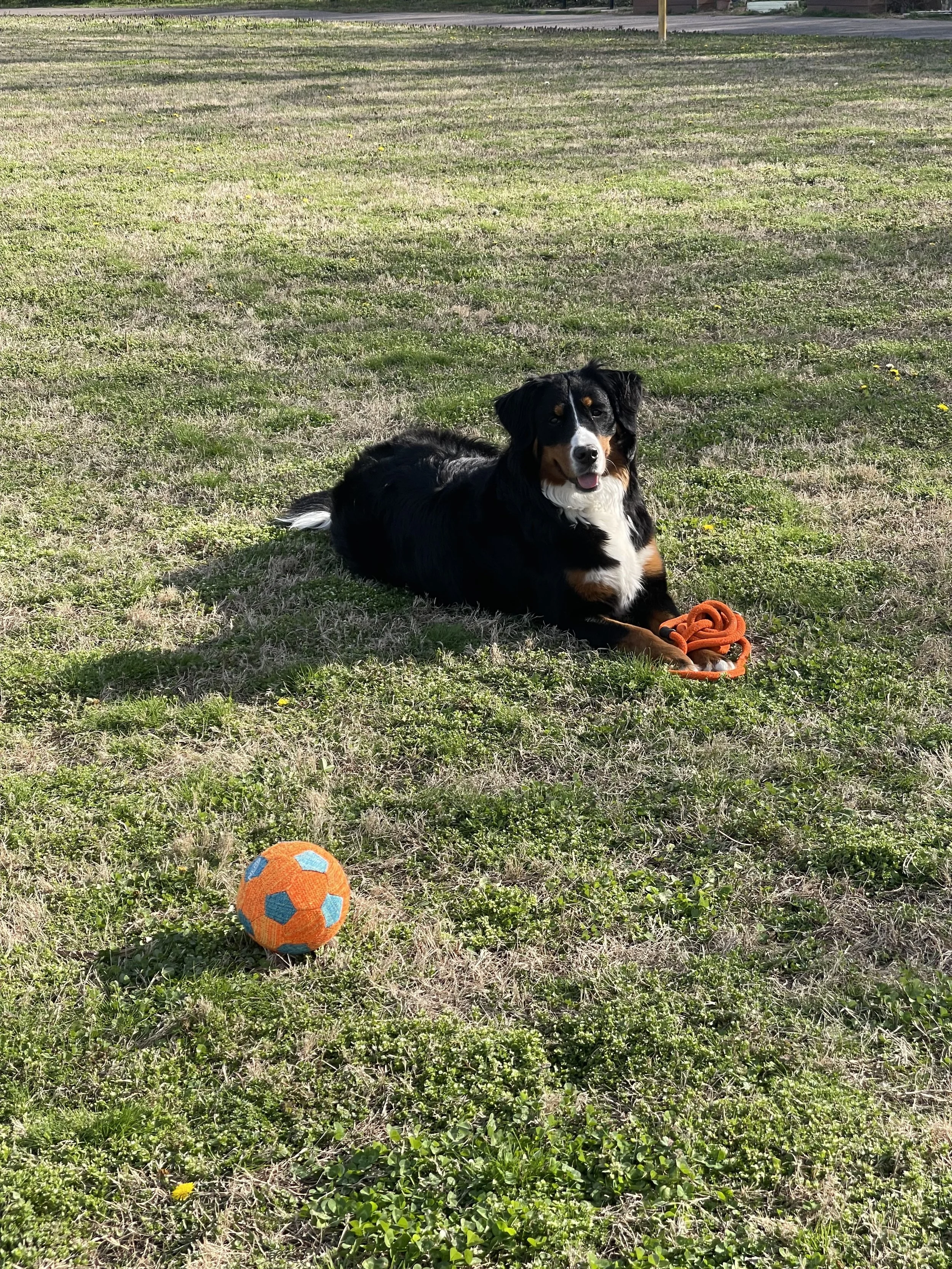
Allergies and grass can trigger hotspots
Why Summer Can Trigger Hot Spots
Summer creates the perfect environment for moisture to build up in the coat.
Things like:
humidity
swimming
wet grass
sweating
lake days
sprinklers
thick fur
can all leave moisture trapped close to the skin.
And when skin stays warm and damp for long periods of time, irritation can quickly get worse.
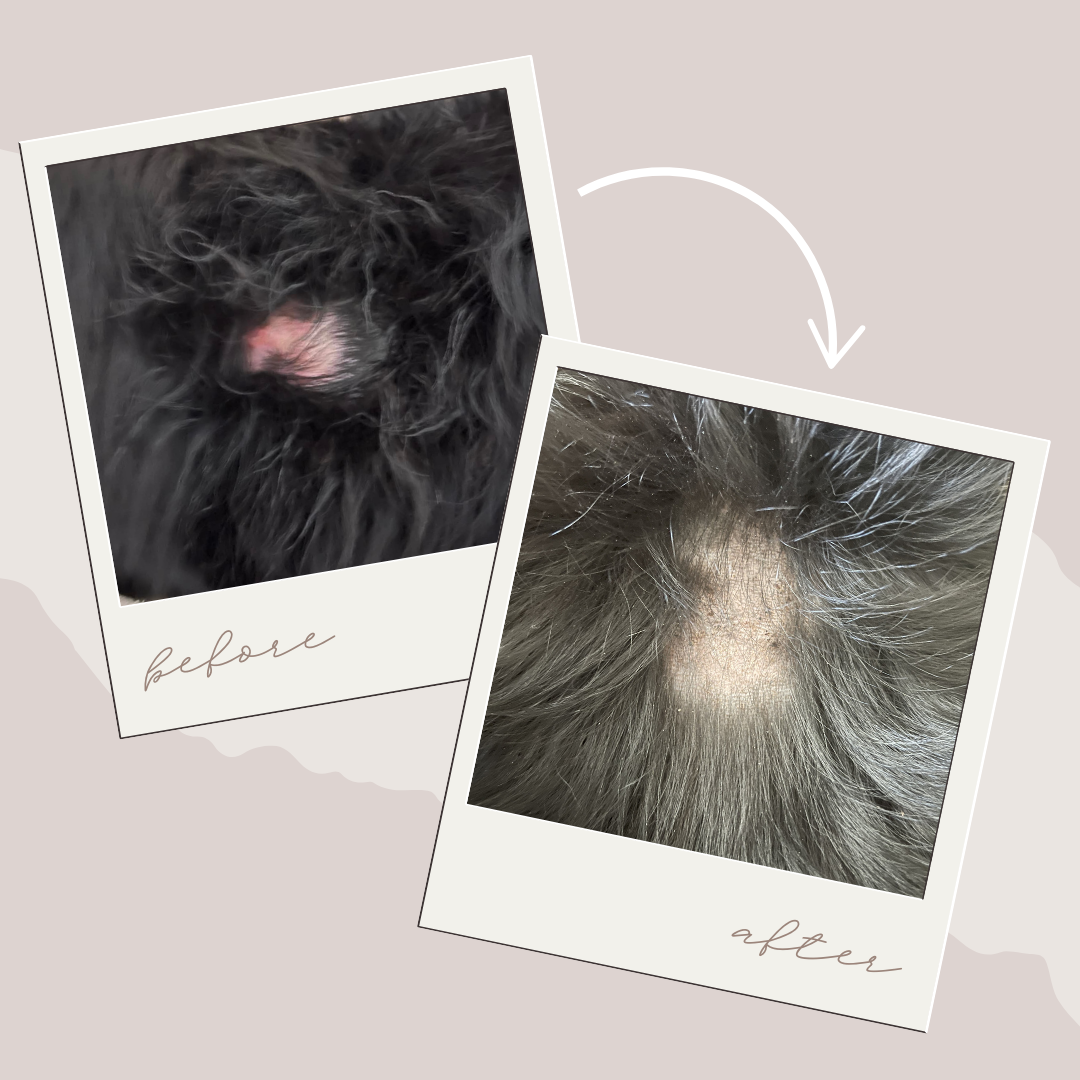
before and after hots spot
Thick Fur Holds Moisture Longer
Dogs with thicker coats may struggle even more during summer because dense fur can trap:
heat
humidity
saliva from licking
water after swimming
Sometimes the skin underneath stays damp even when the top coat feels dry.
This was especially true for Everest’s thick Bernese coat.
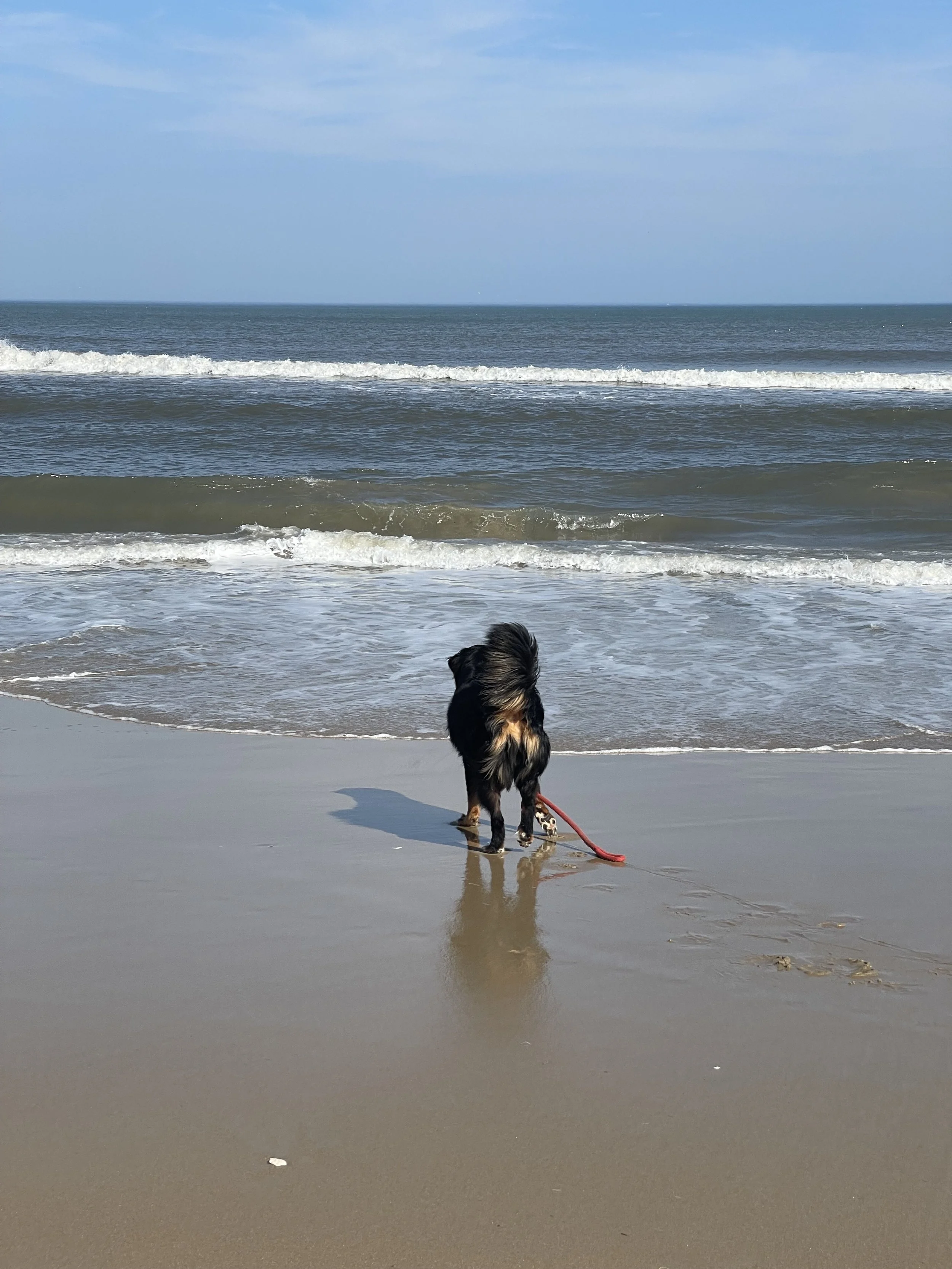
Allergies Also Peak in Summer
Summer can also bring:
grass allergies
pollen
environmental irritation
flea activity
All of these can cause itching, scratching, and licking — which may eventually lead to hot spots.
Why Moisture Became So Important to Me
For years, I focused mostly on the irritation itself. I bought Hot Spot sprays -but eventually I learned
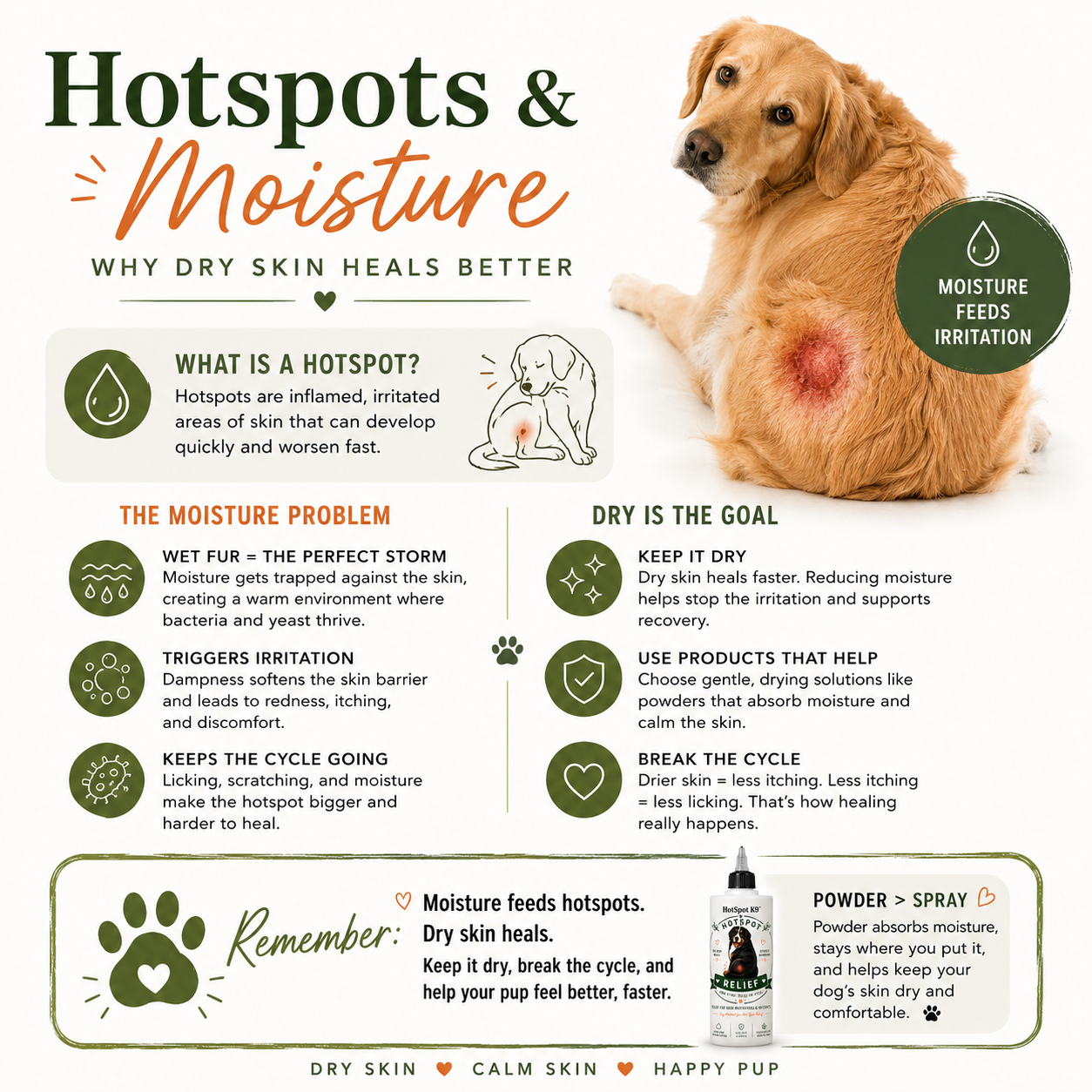
moisture was a huge part of the cycle.
That’s one reason I became interested in gentle moisture control instead of constantly adding more wet sprays to already irritated skin.
What Helped My Dogs Most
The biggest change for me was learning to:
keep the area dry
reduce trapped moisture
avoid heavy fragrances
gently calm irritated skin
That idea eventually became the beginning of HotSpot K9.
Final Thoughts
Every dog is different, and severe hot spots should always be evaluated by a veterinarian. But summer heat, humidity, moisture, and thick fur can absolutely make hot spots more common for many dogs.
Sometimes keeping the skin calm, clean, and dry can make a much bigger difference than people realize.