
Why Dogs Keep Licking Hot Spots
If your dog suddenly cannot stop licking, chewing, or scratching one irritated spot, you’re definitely not alone.
One minute everything seems fine… and the next you notice a red, irritated patch that seems to be getting worse by the hour.
That’s the frustrating thing about hot spots on dogs: once the irritation cycle starts, dogs tend to keep licking the area over and over again, which can quickly make things worse. Like in this photo with Everest. This grew overnight!

Everest - with her new hotspot
I grabbed my hotspot spray, and guess what- it kept growing in size and she kept biting.
I kept thinking:
Why doesn’t this work? It didn’t work on my labs either.
Why Dogs Can’t Leave Hot Spots Alone
Hot spots are extremely irritating for dogs.
The area may:
itch
sting
feel warm
stay damp
become sensitive
So naturally, dogs try to lick the area for relief.
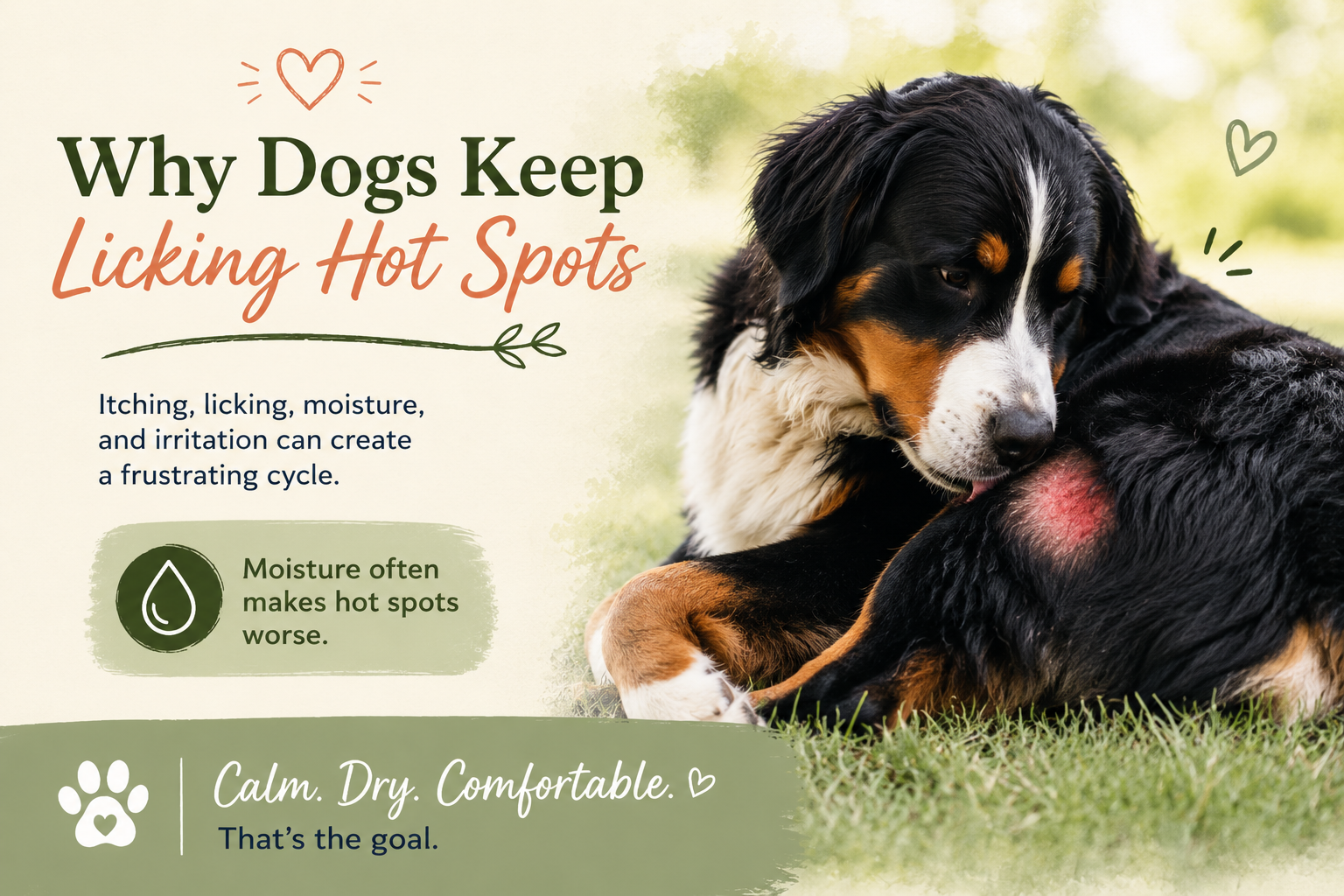
The problem is… licking usually adds even more moisture to already irritated skin.
That extra moisture can create a cycle:
irritation starts
dog licks
skin stays damp
irritation worsens
dog licks even more
And suddenly, a tiny irritated spot becomes a much larger problem with bacteria and yeast in the wings waiting to grow.
Moisture Often Makes Hot Spots Worse
One thing many dog owners do not realize is how much moisture can contribute to hot spots.
This is especially common in:
thick-coated dogs
dogs that swim often
dogs exposed to wet grass
humid summer weather
dogs with allergies or sensitive skin
Moisture can easily become trapped under the fur — especially around:
belly fur
neck folds
under collars or harnesses
paws
legs
behind the ears
In the ears
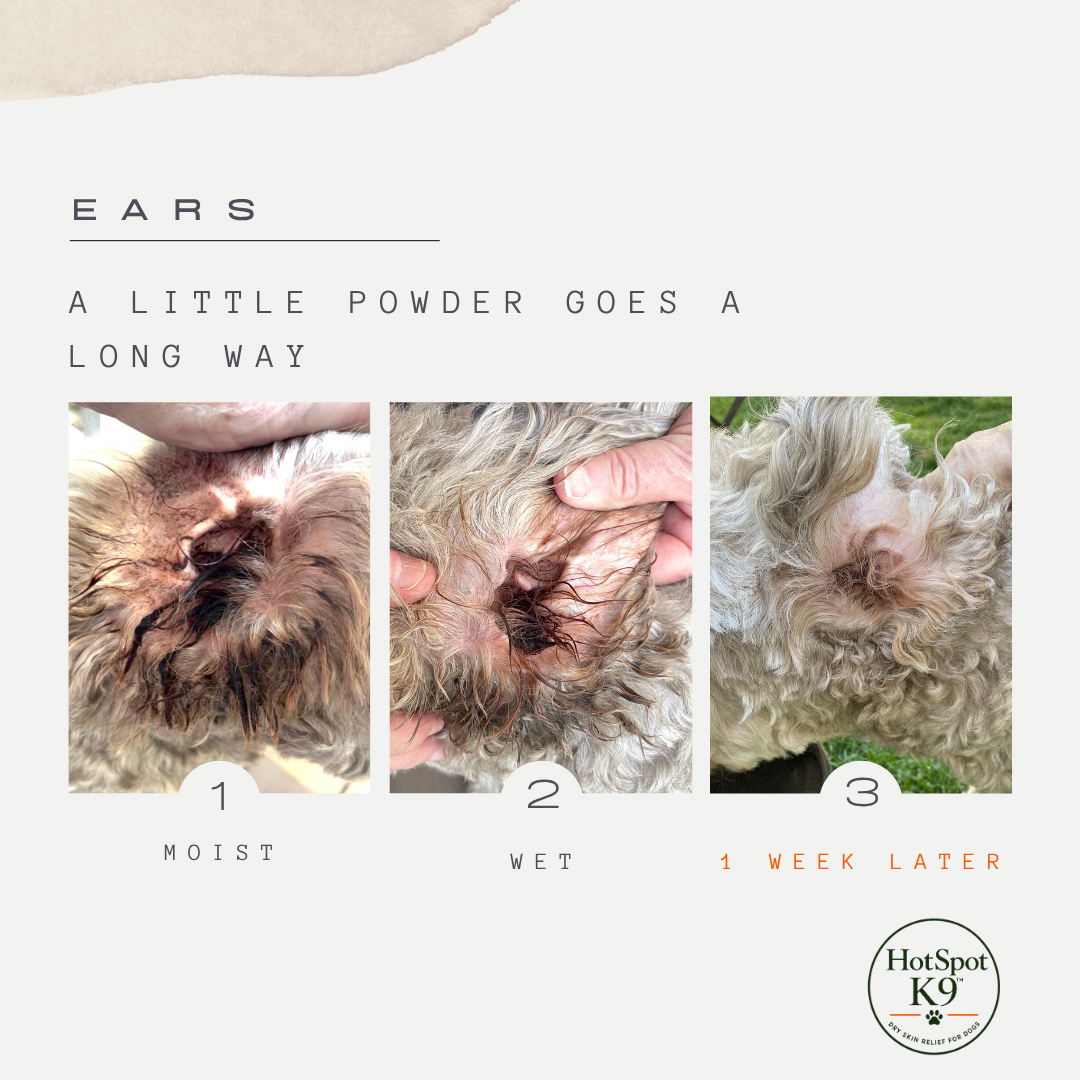
gently brushing powder outside of the ear flap and letting a bit fall in, helps control moisture build up gently.
When skin stays warm and damp, irritation can escalate quickly.
That’s why moisture control became such a huge focus for me.
Why Thick Fur Can Make Things Harder
Dogs with thick or double coats often struggle more because airflow has a harder time reaching the skin.
Breeds like:
Bernese Mountain Dogs
Golden Retrievers
Labs
Doodles
Newfoundlands
can trap moisture close to the skin without owners even realizing it. Sometimes the fur on top looks dry while the skin underneath is still damp.
The Goal Is Calm, Clean, Dry Skin
When my own dogs started dealing with irritation, I searched everywhere for Hot spot help.
All the sprays kept popping up.
I went to the big pet stores… again, more sprays.
Some seemed to help temporarily, but I kept noticing the same cycle: damp skin, constant licking, and irritation that never fully seemed to calm down for long.
I wanted something different.
I needed something soft and simple that could help absorb moisture while still feeling gentle on sensitive skin. I also wanted peace of mind knowing the ingredients felt safe if my dog happened to lick the area.
That’s one reason I created HotSpot K9 — a safe potato-powered powder designed to help keep irritated areas dry without harsh ingredients or thick, heavy residue.
My formula was inspired by one simple idea: Non-toxic moisture control that stops hotspots.
Simple Ways to Help Reduce Licking
If your dog keeps obsessively licking a hot spot, these simple steps may help:
Keep the area clean and dry
Dry fur thoroughly after swimming or baths
Avoid trapping moisture under thick fur
Wipe down paws and belly after wet grass
Reduce constant dampness around irritated skin
Watch for allergy flare-ups during spring and summer
All of these can be managed with Hotspot K9 Powder as a perfect addition.
When To Call Your Vet
Some hot spots can become severe quickly.
It’s always best to contact your veterinarian if you notice:
swelling
odor
discharge or pus
spreading redness
bleeding
pain
fever
excessive lethargy
Final Thoughts
Hot spots can feel overwhelming when they appear suddenly — especially when your dog will not stop licking the area.
But in many cases, helping keep the skin calm, dry, and comfortable can make a huge difference.
That simple idea became the inspiration behind HotSpot K9 — and honestly, it’s why I became so passionate about the “dry method” in the first place.